*Trigger warning: post mentions suicide, violence, and abuse.*
There are two things I have been terrified to write about: grief and spirituality.
Billions of us have experienced both of these. And while there are certain aspects of each we can lump together in some collective experience, both of these journeys remain as unique and personal as each person living them.
We are so quick to say we understand how others feel, but the truth is, we can only understand to a certain degree. So, when I find those familiar words falling out of my mouth, I balk. I stop. I apologize. I correct myself.
Grief and spirituality are two separate things, but they can be so intertwined with each other that they might as well be a couple of dainty gold necklace chains that were thrown in the drawer of a jewelry case instead of properly hung. They get twisted up with the links caught on each other and take lots of time, patience, and precision to sort out. And many times, they end up staying permanently fused.
I don’t feel like I can responsibly write about these things without giving this disclaimer. I don’t want to put my own experiences out there in a way where it makes anyone else feel unseen or dismissed. I don’t want to make anyone feel like I am suggesting others should approach thinking about these things the way I do.
However, these run so deep in my veins and consume so much of my thinking, it also feels incredibly wrong to exile those parts of myself from writing and sharing.
One day a former coworker had come back from a music festival with a quote that had been painted in a mural there. I keep this quote on a small pink tri-folded piece of paper in my wallet.
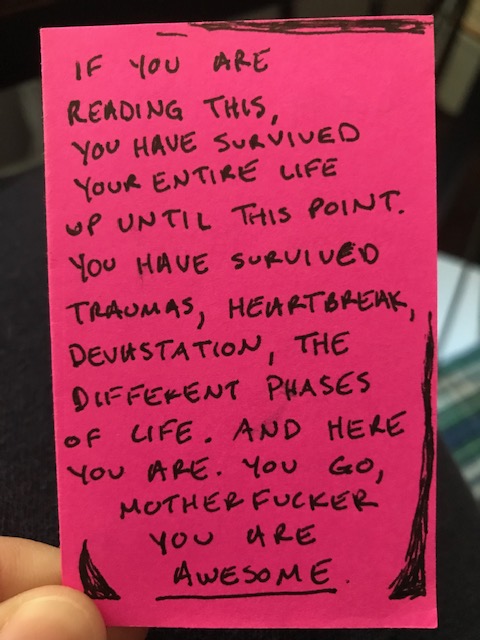
It says, “If you are reading this, you have survived your entire life up until this point. You have survived traumas, heartbreak, devastation, the different phases of life. And here you are. You go, motherfucker. You are awesome.”
On the inside, I wrote, “Lizzy Roddy, you are stronger than you know.”
I also wrote the names of many loved ones that I’ve lost to car accidents and suicides and alcoholism and other serious health conditions. I wrote down the most painful heartbreaks that almost totally undid me. I listed a mentor that groomed me, stripping me of my entire self until I was unrecognizable. I wrote about leaving an outlier Christian group that truly could have been considered a cult. I added the family member who physically attacked me because of my sexual orientation. I wrote of my own health scares and accidents and financial distresses.
I have, for a very long time, defined a big part of myself around losses and suffering. I think I always will because these three and a half decades I’ve lived through have seemed to hold more than enough for a lifetime.
I only have one close family member that I grew up around who is still living. And in the time of a global pandemic, that’s pretty scary for me.
That isn’t to say I don’t have people in my life I love so much I consider them family. And even though I define such a large piece of my identity around these empty spaces I hold, it doesn’t mean that I don’t also recognize how full other parts of my life have become.
I want to share this excerpt from Wholehearted Faith, the last book from the late Rachel Held Evans (another loss that devastated me) with Jeff Chu:
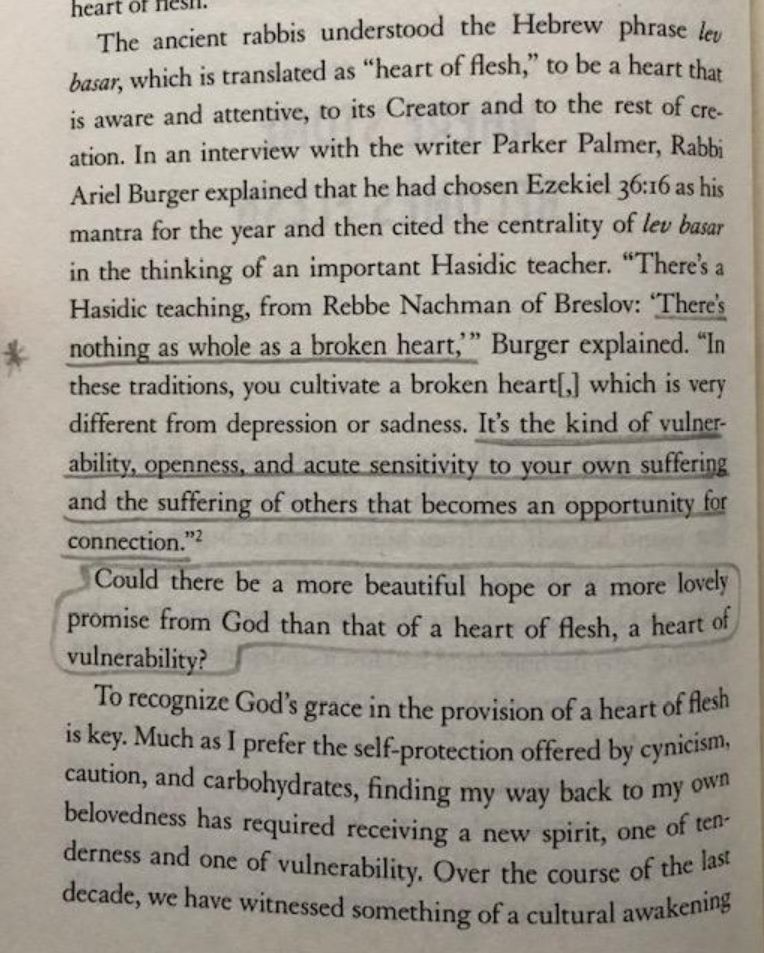

This idea that there is nothing as whole as a broken heart is something I can get behind. Not to say that I haven’t often struggled with the depression part of this, but there is something so remarkable about this notion that it just can’t be ignored.
I have been cultivating this in myself for years without being consciously aware of it. And that is why I’m permitting myself to write from those spaces. I think they often have the most to offer.
 Lizzy Thinks Too Much
You demonstrate courage and amazing introspection in sharing these perspectives. Thank you.
LikeLiked by 1 person